


 English
  Tiếng Việt
 What is a travel power adapter for the Philippines?
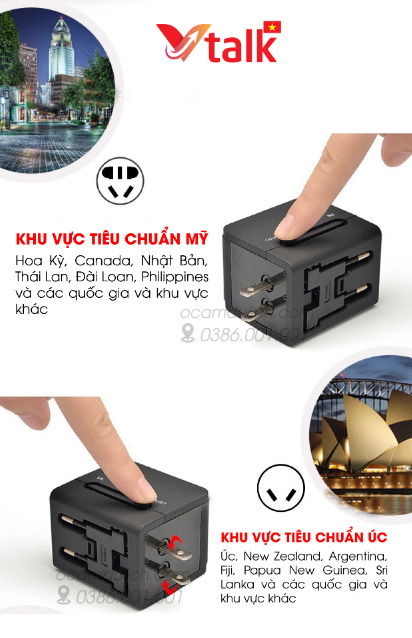
have typesA, B, and C.Philippines electrical outlet types A, B, C
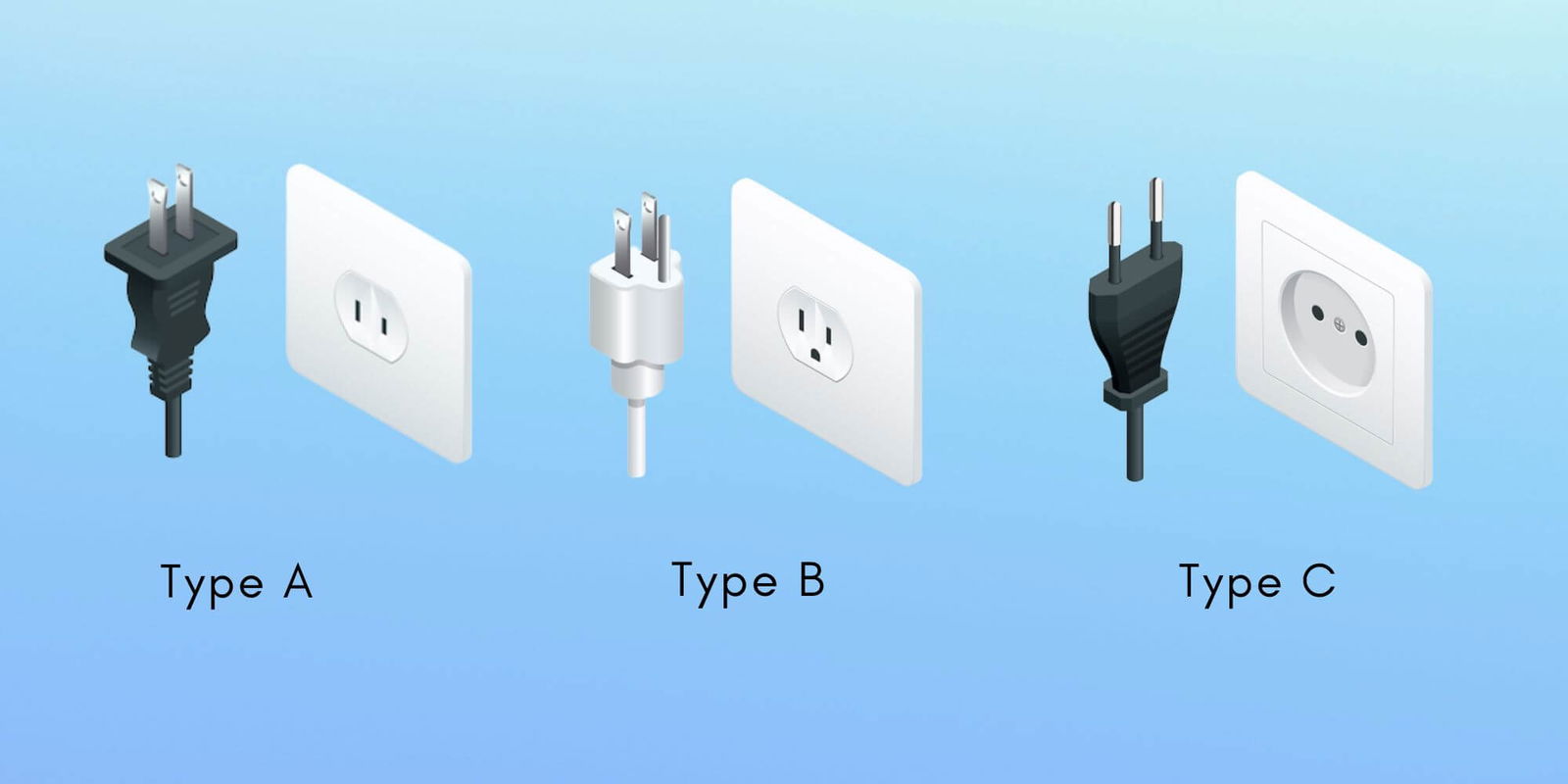
: This plug type is mainly used in the USA, Canada, Mexico, Central America, China, and Japan. Type A has two parallel flat pins and no grounding pin. This is the only plug type that fits a Type A outlet.
Type A: Similar to Type A, Type B is also used in the USA, Canada, Mexico, Central America, and Japan. However, Type B has an additional grounding pin. Type A plugs can also be used with Type B outlets.
Type B: This plug type is the European standard and is commonly used in Europe, South America, and Asia. Type C has two parallel round pins and no grounding pin. Type E and F plugs are also compatible with Type C outlets. Electrical outlets in the Philippines are mainly two-pin ungrounded outlets of Type A or Type C. It is rare for Philippine electrical outlets to accept both of these plug types. If you bring a US three-pin plug (Type B), you will need an adapter to connect to the two-pin ungrounded outlet. (Image of Philippine electrical outlets)
Type CIf you have a trip to the Philippines soon, please refer to the following products:
Philippines
- Travel adapterFilipino: Ensure you stay connected with your electronic devices.
- Translator devicePhilippines SIM Card: Unlimited communication, making it easy to integrate.
- Sim Philippines: Fast and convenient internet access throughout your trip.
When choosing to buy a universal power socket, we encourage you to choose reputable suppliers like Sahaha to purchase products, because the sockets here are guaranteed to be made of fire-resistant materials and comply with safety standards. And during use, you should also avoid using low-quality or damaged sockets, as they can cause short circuits leading to explosions.
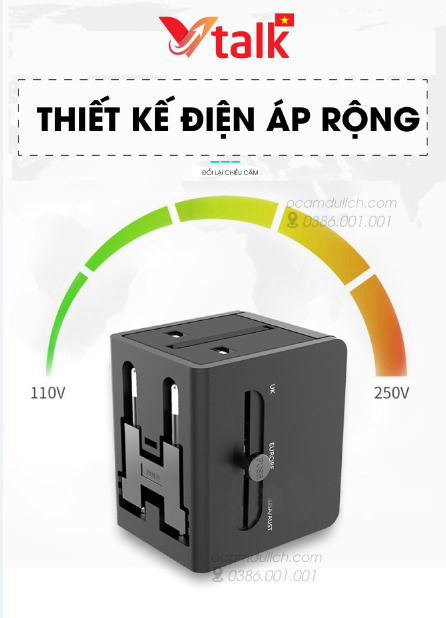
High-standard universal power plug
If you are traveling to the Philippines and are not familiar with the local electrical regulations, please contact Sahaha via hotline19002106 – 0386.001.001 – 0974.051.444 purchase a suitable universal adapter. to learn about local rules and regulations related to electricity usage and sockets. This will help you better understand the specific local requirements and safety measures.
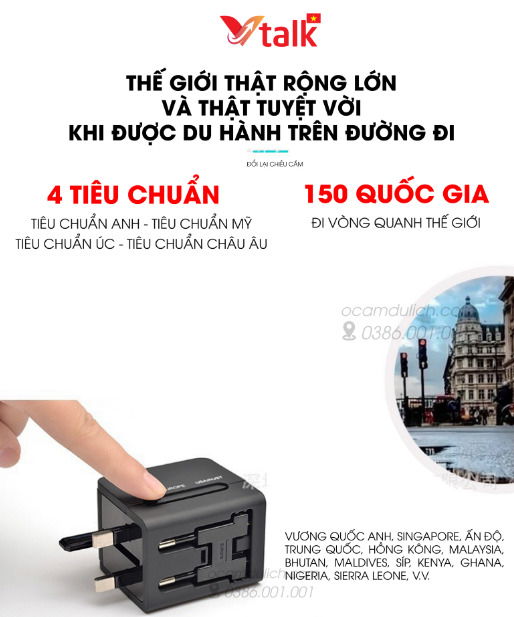
Universal power plug suitable for every trip
Learn about the voltage and frequency of electricity in the Philippines
The power socket in the Philippines provides a standard voltage of. If your device does not support a wide voltage range, using a voltage converter along with a travel adapter is essential.with a frequency ofHotline: 1900 2106 - 0386 001 001. Whether your devices can be used in the Philippines depends on the socket voltage in your country of origin.
If the socket voltage in your country is between 220V-240V, you can use your devices directly in the Philippines. This generally applies to most countries in Europe, Australia, the UK, Africa, and Asia.
However, if the socket voltage in your country is between 100V-127V (such as the USA, Canada, and some South American countries), you will need a voltage converter to use your devices in the Philippines.
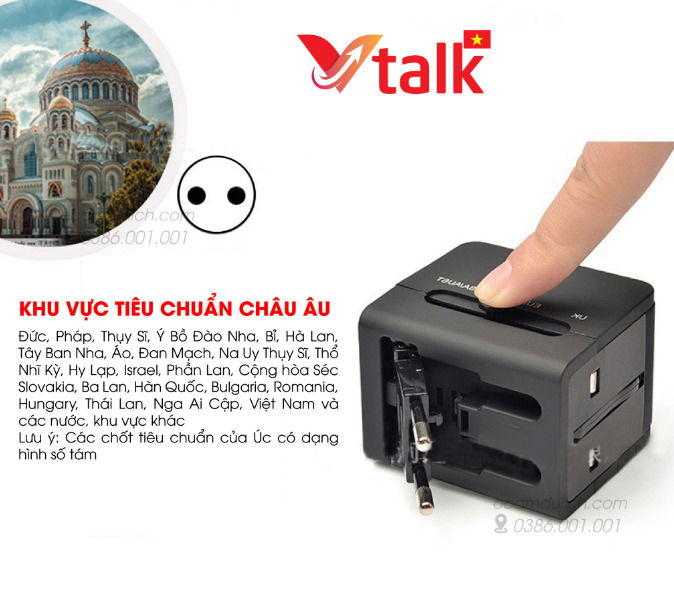
Learnabout the voltage and frequency of electricity in the Philippines
Countries that use the same power plug as the Philippines
The Philippines uses socket types A, B, and C. Socket types A and B are mainly used in North America, Mexico, Japan, and some other countries worldwide. Socket type C is commonly used in Europe (except the UK, Ireland, Cyprus, and Malta), most Asian countries (except India and some others), some Middle Eastern regions like Israel and the United Arab Emirates, as well as some islands.
To determine if your country's power socket is compatible with the Philippines, you can refer to a detailed list of countries, their socket types, outlets, and voltages. By comparing the socket type used in your country with that of the Philippines, you can determine compatibility.
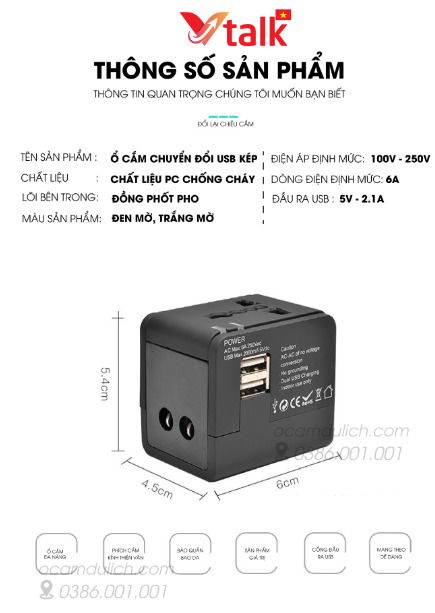
Countries using the same power plug as the Philippines
What travel adapter is needed for the Philippines?
When traveling to the Philippines, you will need a travel adapter to use your electrical devices if the outlets and voltage in your country are not compatible with the electrical system in the Philippines.
Electrical outlets in the Philippines use type A, B, and C. Here are the situations where you might need to use an adapter:
- If your country uses a different outlet type than Type A, B, or C, you will need an adapter to convert from your country's outlet type to one of the types used in the Philippines.
- If your country uses a different voltage than 220V (the standard voltage in the Philippines), you will need a voltage converter to adjust the voltage from the power source to your device.
Therefore, before traveling to the Philippines, check the outlet types and voltage in your country and compare them with the electrical system in the Philippines. Based on these differences, you can purchase and use the appropriate travel adapter to ensure safety and compatibility when using your electrical devices.
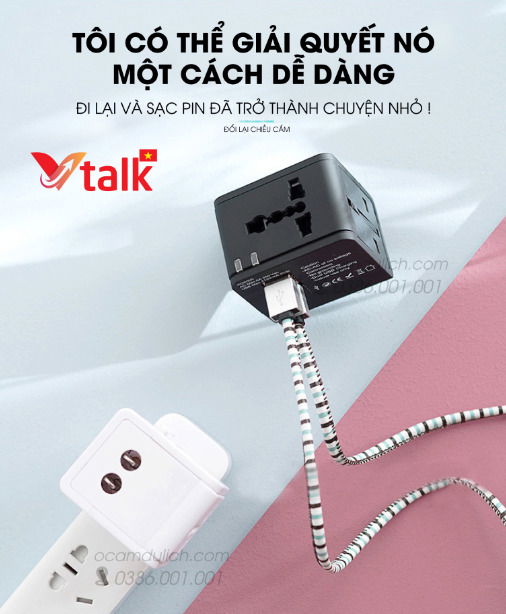
Travel adapter for the Philippines
Safety tips for using electrical plugs in the Philippines
Here are some safety tips for using electrical plugs in the Philippines:
- Check the voltage: Ensure that the voltage of the devices you use is compatible with the local voltage in the Philippines, which is 220V. Using devices with incompatible voltage can cause damage or hazards.
- Use quality outlets: Choose quality outlets made from fire-resistant materials and compliant with safety standards. Avoid using low-quality or damaged outlets, as they can be hazardous and cause electrical shorts.
- Use a voltage converter: If the voltage in your country is not compatible with the voltage in the Philippines, use a voltage converter to ensure that the voltage reaching your device is adjusted appropriately. This helps protect your device from damage or electrical shorts.
- Avoid overloading: Ensure that you do not overload electrical outlets by not plugging too many devices into the same outlet or by using appropriate power strips if necessary.
- Inspect cables: Before use, inspect the cables of your devices to ensure they are free of cracks, tears, or breaks. Using damaged cables can cause electrical shorts or hazards.
- Avoid grounding: In most cases, electrical outlets in the Philippines are not grounded. Therefore, avoid using devices that require grounding directly into outlets without grounding. If necessary, you can use a grounding adapter.
- Monitor load: Monitor the electrical load of the devices you use. Do not plug too many high-power devices into the same outlet, as it can cause overload and fire.
- Use with care: Always use caution when plugging and unplugging electrical plugs. Avoid pulling the power cord by gripping the cable. Unplug by gripping the plug, not by pulling the cable.
- Avoid using wet outlets: Ensure that outlets and electrical appliances are not wet. Avoid using outlets in bathrooms, near water, or in damp environments.
Safety tips for using electrical plugs in the Philippines
Conclusion
Always remember that safety is paramount when using electricity, and adhering to electrical safety rules is crucial when traveling to other countries like the Philippines. If you have any questions or concerns regarding the use of electrical plugs in the Philippines, contact us immediately via hotline 19002106 – 0386.001.001 – 0974.051.444 or visit Sahaha's two store branches directly at: Hanoi (368 Lang Street, Dong Da District) and Ho Chi Minh City (194 Cong Hoa Street, Ward 12, Tan Binh District)for the quickest advice!